
I spent 15 years in the industry, and the hardest part was never the design itself. It was getting interior design clients to make decisions.
A client of mine took eleven days to choose between two dining room chairs. The options were only $80 apart. The decision was not complex — either chair would look great in the space, matched what the client wanted, and stayed within budget.
But the process felt never-ending.
Day 1 → Emailed client product photos and prices
Day 3 → Sent follow-up email: “Just wanted to make sure you saw these”
Day 5 → Called, no answer. Left voicemail
Day 7 → Sent 3rd email
Day 9 → Phone call about which one I thought would be better
Day 11 → Text message received at 10:47 PM: “Let's go with Chair A”
Eleven days. For a chair…
If you are an interior designer, this story is nothing new. It's everyday life.
The frustrating part is that the client was not difficult. She was lovely, she trusted my judgment, and she genuinely wanted the project to move forward. The problem was not her. The problem was the friction of the process.
Over fifteen years in residential design, I learned that client indecision is rarely about taste. It is about the way we ask them to decide.
Here is what I learned about speeding up the selection process — and why I eventually built a tool to remove the bottleneck entirely.
Why interior design clients stall on decisions (it is not what you think)
When a client ghosts you after you send options, you assume that they are either busy, indecisive, or they never check their email. Sometimes one of those is true. But more often, they are stuck for one of three reasons:
- Too many options. Sending 6 chair images feels like you are giving them plenty to choose from. For sure they'll like one of those, right? To your client, it feels too overwhelming and requires time for them to take them all in. The more choices you present, the more likely they are to defer the decision to “later”. They need you to help narrow down those options, not show them everything that “could” work.
- They cannot visualize the choice. A client cannot picture “the linen one” from a written email description, and they also can't picture what something will look like in their space. If they could, they probably wouldn't need a designer. When a client does not feel confident in making a decision, they do not respond.
- There is no deadline. When you say “Let me know what you think,” you are asking them to prioritize your project over everything else in their inbox. Without a clear cutoff, your email gets put off till later, then buried under 100 other emails.
And then there is the silent killer: the email itself.
Your carefully composed message with four image attachments, price breakdowns, and a friendly sign-off looks like work to them. They open it, see that it requires some thought, and promise themselves they will get to it tomorrow.
Tomorrow becomes next week. Next week becomes a stalled project.
What actually works to speed up interior design client decisions
These are the tactics I used for years before I ever thought about building a website to solve this problem. They work on their own, and they work even better together.
- Narrow down before you present options. Your job is to curate, not show all the possibilities. Most likely you already know which two or three options are right for the project. Send those. When you send eight, you are asking the client to do your editing for you — and they do not have the training or the context to do it well. Two options feels like a recommendation. Eight options feels like a test.
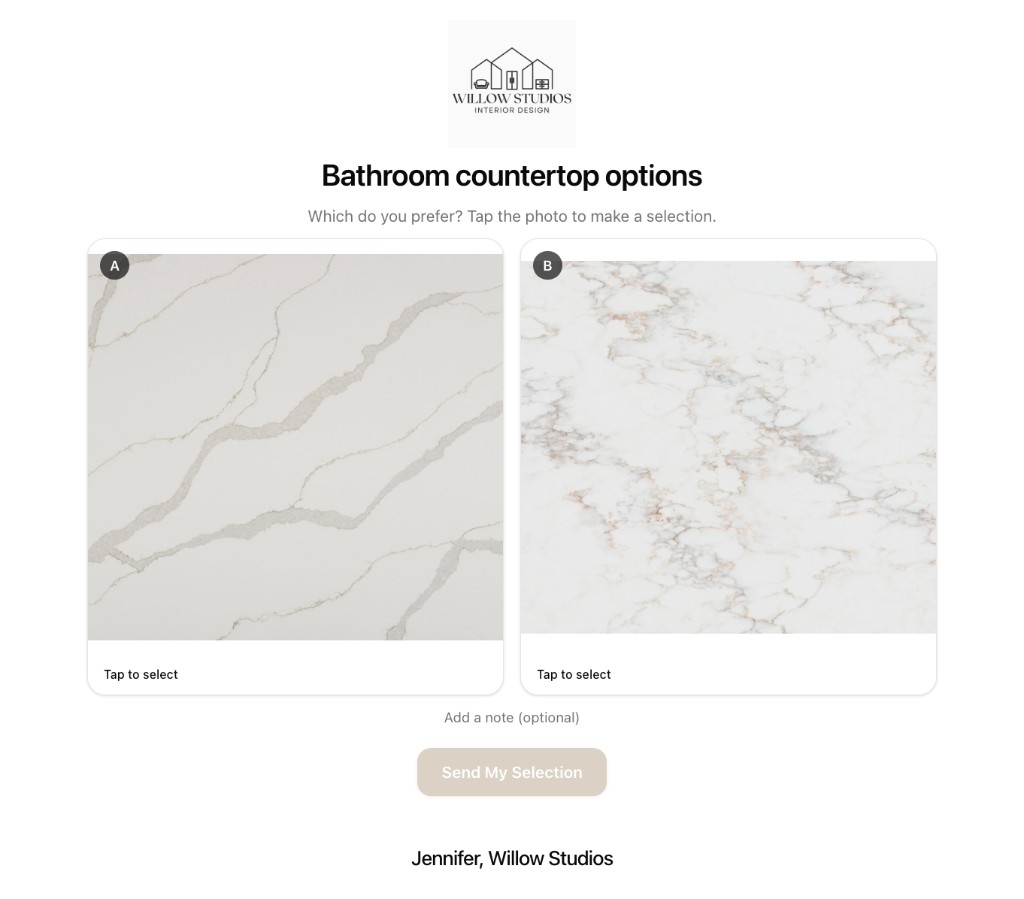
- Present clearly. A client cannot make a confident decision from a written or verbal description. They need to see a clear photo of the furniture piece, fabric, finish, etc. And ideally, if you are sending a tile, show it installed in a room. If you are sending a fabric, show how it looks on a piece of furniture. The closer you can get to “this is what it will look like in your home,” the faster they will make a decision.
- Send a deadline with the options. This is not pushy. This is project management. “I will need your selection by Thursday so we can keep the install date of the 15th.” When a client knows that a real timeline is attached, and that timeline is dependent on them, the decision becomes a priority. Most clients do not realize that they were the reason their project was delayed.
- Make the act of responding effortless. The harder it is to reply, the longer they wait. An email that requires them to write back, describe their choice, and reference the correct image is friction. A link they can open on their phone, tap once, and move on is not. This was the insight that changed everything for me. I realized I was not chasing clients because they were slow. I was chasing them because I had made the response too difficult.
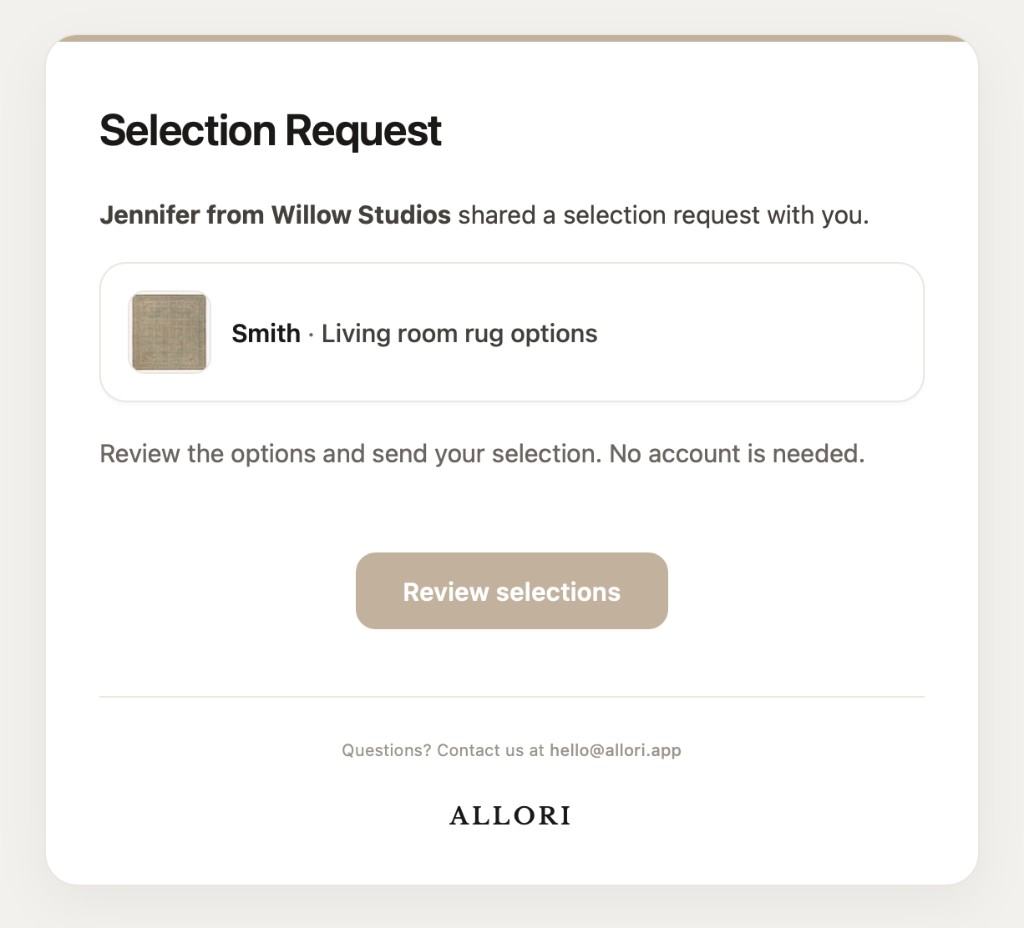
- Follow up once, then diagnose. One reminder is professional. Three is chasing. If a client has not responded after your deadline and one follow-up, there is usually a deeper issue: budget anxiety, a spouse who needs to weigh in, or fear of making the wrong choice. That conversation is worth having. More emails are not helping.
A better way to get interior design clients to make decisions
After years of this cycle, I realized the fix was not well-written emails, stricter deadlines, or more follow-ups. The solution was changing the way I asked my clients to make a decision.
I started experimenting with a simple, branded page where I could show two or three options — a photo, a price, and a note with the deadline — and send my client one link. They opened it on their phone, saw everything clearly laid out, and tapped the option they wanted. I received a notification the moment they chose. No written reply was required from them, no account needed, and no app for them to download.
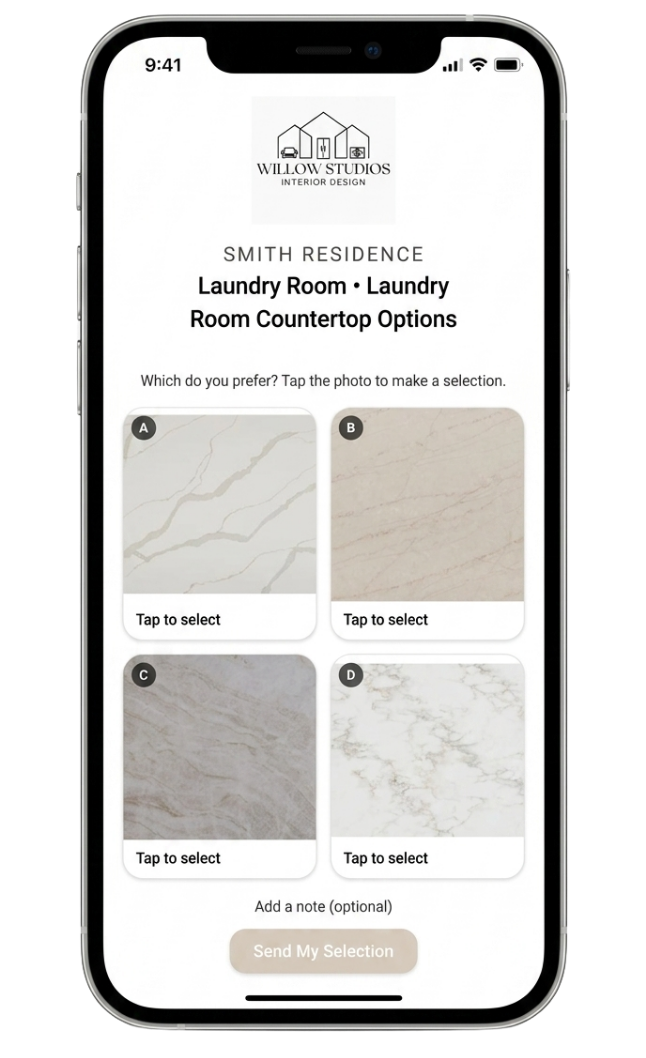
It was the same curation I had always done. The same deadline. The same two or three chairs. But the friction was gone.
The client who took eleven days to pick a chair? The next time I presented options using this new system, she chose in forty-seven minutes. Not because she changed. Because I finally made the decision as easy as possible for the client.
After years of this cycle, I realized the fix was not well-written emails, stricter deadlines, or more follow-ups. The solution was changing the way I asked my clients to make a decision.
I started experimenting with a simple, branded page where I could show two or three options — a photo, a price, and a note with the deadline — and send my client one link. They opened it on their phone, saw everything clearly laid out, and tapped the option they wanted. I received a notification the moment they chose. No written reply was required from them, no account needed, and no app for them to download.
It was the same curation I had always done. The same deadline. The same two or three chairs. But the friction was gone.
The client who took eleven days to pick a chair? The next time I presented options using this new system, she chose in forty-seven minutes. Not because she changed. Because I finally made the decision as easy as possible for the client.
That experiment became Allori.
I did not set out to build software. My motivation was to stop wasting time and energy being a project manager and get back to what I enjoyed most: designing. But once I saw how a small shift in client communication could change the entire timeline of a project and make my life less stressful, I knew other designers could benefit as well.
If you are still managing interior design selections through email threads and follow-up calls, there is a faster, easier way. It does not require convincing your clients to create an account or download a new app. Just send them a link with the options and make the selection process efficient and even enjoyable for your clients.
See how fast your clients respond when you make the decision effortless.